I Think I May Have Stumbled Across the Question of the Next Decade in Education!
A few mornings ago, after dropping my daughter off at school, I put on an episode of The Why Files during the drive home. The topic was morphic resonance.
This was not where I expected my morning to go.
If you’ve never heard of morphic resonance, it’s a controversial theory that suggests knowledge and patterns somehow accumulate over time, making them easier for others to access. It’s one of those ideas that sits in an uncomfortable place. Interesting enough to keep people talking about it for decades, controversial enough that much of the scientific community has dismissed it.
Listening to the podcast wasn’t unusual for me.
What is fairly typical is what happens when an idea resonates.
I start turning it over in my head. I look for connections to things I’ve experienced, ideas I’ve encountered before, and questions I’ve been wrestling with in my work. Sometimes those threads go nowhere.
This one didn’t.
I found myself thinking about it the next day.
And then the day after that.
What surprised me wasn’t that I found the theory convincing. What surprised me was that I couldn’t stop thinking about the questions hiding underneath it.
The episode talked about rats learning mazes, dogs that seemed to know when their owners were coming home, and crossword puzzle experiments that attempted to test whether knowledge could somehow become easier to access over time.
Some of the experiments have been criticized. Some have failed to convince mainstream researchers. Some are probably better viewed as curiosities than evidence.
But at some point I realized I wasn’t actually interested in arguing whether morphic resonance was right or wrong.
I had become interested in something else entirely.
Why did the idea feel so familiar?
Why did it feel like it was touching on something that mattered, even if the proposed explanation wasn’t correct?
The question that kept coming back to me was surprisingly simple:
❝ 𝗪𝗵𝗮𝘁 𝗶𝗳 𝘄𝗲’𝗿𝗲 𝘁𝗵𝗿𝗼𝘄𝗶𝗻𝗴 𝗮𝘄𝗮𝘆 𝘁𝗵𝗲 𝗾𝘂𝗲𝘀𝘁𝗶𝗼𝗻 𝗯𝗲𝗰𝗮𝘂𝘀𝗲 𝘄𝗲 𝗱𝗼𝗻’𝘁 𝗮𝗴𝗿𝗲𝗲 𝘄𝗶𝘁𝗵 𝘁𝗵𝗲 𝗮𝗻𝘀𝘄𝗲𝗿? ❞
That thought sent me down a completely different path.
The more I read, the further I moved away from morphic resonance and the closer I got to ideas that are taken very seriously.
I found myself reading about the Flynn Effect and the decades-long rise in IQ scores. I started looking at research on collective intelligence and the ways groups solve problems. I spent time reading about how knowledge accumulates across generations and how much of what we consider individual intelligence is actually built on foundations laid by countless people before us.
One finding in particular stuck with me.
❝ 𝗜𝗻 𝗺𝗮𝗻𝘆 𝘀𝗶𝘁𝘂𝗮𝘁𝗶𝗼𝗻𝘀, 𝗮 𝘄𝗲𝗹𝗹-𝗰𝗼𝗻𝗻𝗲𝗰𝘁𝗲𝗱 𝗴𝗿𝗼𝘂𝗽 𝗼𝗳 𝗮𝘃𝗲𝗿𝗮𝗴𝗲 𝗽𝗲𝗿𝗳𝗼𝗿𝗺𝗲𝗿𝘀 𝗰𝗮𝗻 𝗼𝘂𝘁𝗽𝗲𝗿𝗳𝗼𝗿𝗺 𝗵𝗶𝗴𝗵𝗹𝘆 𝗶𝗻𝘁𝗲𝗹𝗹𝗶𝗴𝗲𝗻𝘁 𝗶𝗻𝗱𝗶𝘃𝗶𝗱𝘂𝗮𝗹𝘀 𝘄𝗼𝗿𝗸𝗶𝗻𝗴 𝗮𝗹𝗼𝗻𝗲. ❞
The more I thought about that, the more it bothered me.
Not because I disagreed with it.
Because it felt obvious.
When I think about the best teams I’ve worked with, the magic rarely came from having the smartest person in the room. It came from the interactions between people. It came from ideas colliding, assumptions being challenged, and one person’s insight becoming another person’s starting point.
Somewhere around that point, my thoughts drifted toward education.
Maybe that’s inevitable for me.
I’ve spent enough time in education and technology that almost every interesting idea eventually ends up getting filtered through that lens.
The more I thought about collective intelligence, the more I realized how much of education still revolves around the individual.
We measure individuals.
We assess individuals.
We credential individuals.
And while collaboration is encouraged, the systems themselves are still largely designed around individual performance.
There’s nothing inherently wrong with that.
But I started wondering whether we might be overlooking something important.
What if intelligence isn’t just an individual phenomenon?
Or maybe a better way to say it is this:
❝ 𝗪𝗵𝗮𝘁 𝗶𝗳 𝗶𝗻𝘁𝗲𝗹𝗹𝗶𝗴𝗲𝗻𝗰𝗲 𝗵𝗮𝘀 𝗮𝗹𝘄𝗮𝘆𝘀 𝗯𝗲𝗲𝗻 𝗯𝗼𝘁𝗵 𝗶𝗻𝗱𝗶𝘃𝗶𝗱𝘂𝗮𝗹 𝗮𝗻𝗱 𝗰𝗼𝗹𝗹𝗲𝗰𝘁𝗶𝘃𝗲, 𝗯𝘂𝘁 𝘄𝗲’𝘃𝗲 𝗯𝗲𝗲𝗻 𝗺𝘂𝗰𝗵 𝗯𝗲𝘁𝘁𝗲𝗿 𝗮𝘁 𝗺𝗲𝗮𝘀𝘂𝗿𝗶𝗻𝗴 𝗼𝗻𝗲 𝘁𝗵𝗮𝗻 𝘁𝗵𝗲 𝗼𝘁𝗵𝗲𝗿? ❞
That thought sat in the back of my mind for a while before it collided with another idea I’d been thinking about.
A while back, I found myself sketching out a concept for a collaborative environment where people could bring their AI of choice into a shared space. What interested me wasn’t the output people would generate. It was the process.
I wanted to see the questions people were asking.
I wanted to see how different people approached the same problem.
I wanted to see where assumptions broke down and where new ideas emerged.
At the time, I thought I was thinking about collaboration.
Looking back, I think I was thinking about collective intelligence without realizing it.
And that’s where this entire rabbit hole took an unexpected turn.
Because the more I thought about collective intelligence, the less I found myself thinking about AI as a tool.
Most conversations about AI in education still focus on what AI can do for an individual. How it can help someone work faster, learn faster, create faster, or become more productive.
Those conversations are important.
But they suddenly started feeling smaller than the question that was forming in my head.
For years I’ve joked that:
𝗔𝗜 + 𝗛𝗜 = 𝗥𝗢𝗜
And honestly, I still believe that.
Organizations will absolutely see returns from using AI effectively.
But lately I’ve found myself questioning whether that’s the most interesting outcome.
The more I think about 𝗛𝘂𝗺𝗮𝗻 𝗜𝗻𝘁𝗲𝗹𝗹𝗶𝗴𝗲𝗻𝗰𝗲 and 𝗔𝗿𝘁𝗶𝗳𝗶𝗰𝗶𝗮𝗹 𝗜𝗻𝘁𝗲𝗹𝗹𝗶𝗴𝗲𝗻𝗰𝗲, the less I see a story about augmentation and the more I see a story about interaction.
Not one person working with one AI.
Not even groups of people working with AI.
I’m thinking about entire communities, organizations, and learning systems where Human Intelligence and Artificial Intelligence are continuously interacting, building on one another, and creating new knowledge together.
At that point, AI + HI starts to feel like an incomplete equation.
Maybe the result is productivity.
Maybe it’s discovery.
Maybe it’s collective intelligence itself.
Maybe it’s something we don’t have language for yet.
And that’s when I realized how far I had drifted from where this started.
I began by listening to a Why Files episode about morphic resonance.
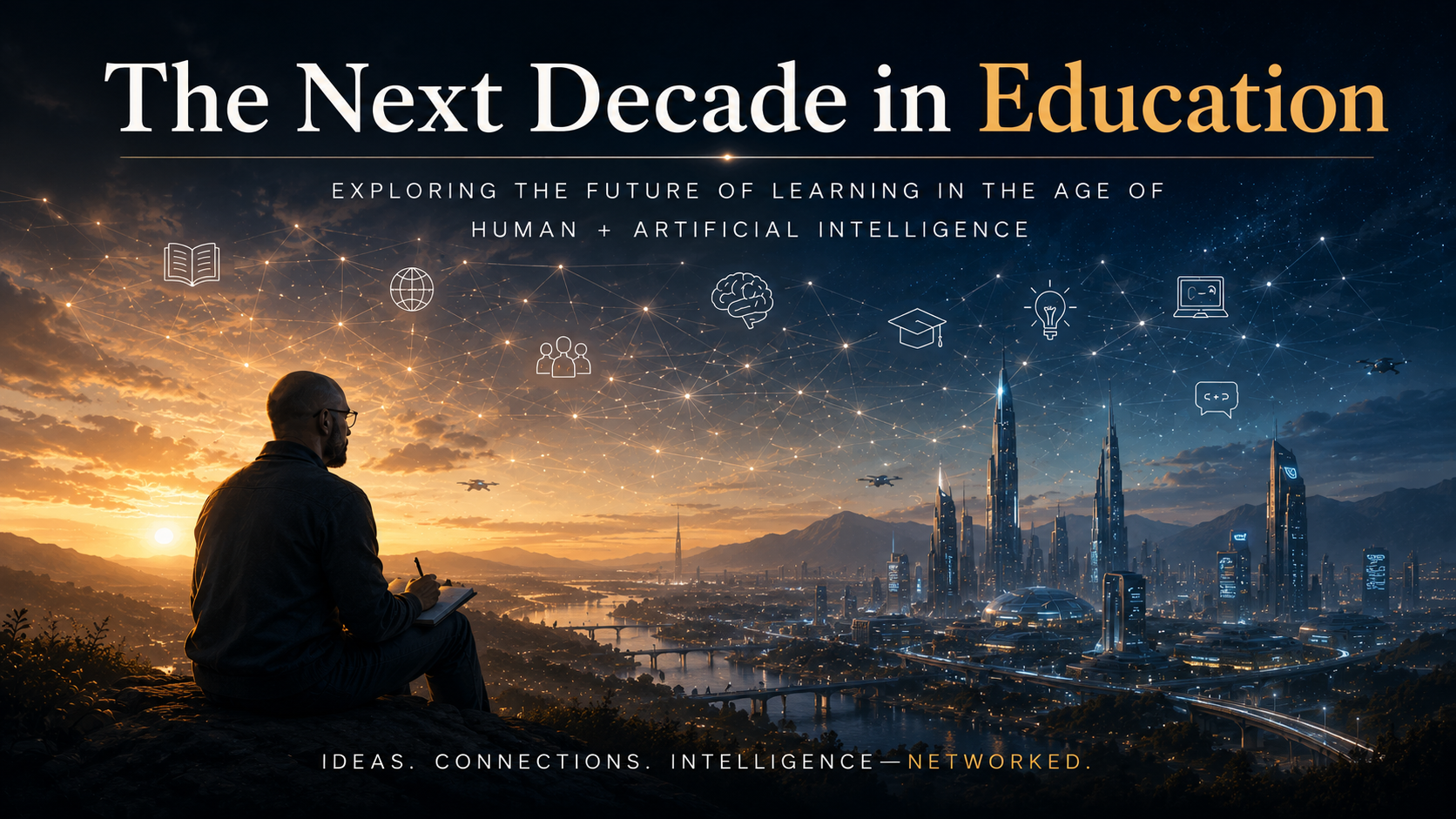
I ended up questioning whether the future of education might depend less on how we develop individual intelligence and more on how we cultivate networked intelligence.
I still don’t know what the answer is.
But I can’t shake the feeling that this might be one of the most important educational questions of the next decade:
❝ 𝗪𝗵𝗮𝘁 𝗵𝗮𝗽𝗽𝗲𝗻𝘀 𝘄𝗵𝗲𝗻 𝗶𝗻𝘁𝗲𝗹𝗹𝗶𝗴𝗲𝗻𝗰𝗲 𝗯𝗲𝗰𝗼𝗺𝗲𝘀 𝗻𝗲𝘁𝘄𝗼𝗿𝗸𝗲𝗱? ❞
Further Reading
One of the interesting things about writing this article is that it emerged from a chain of ideas rather than a single source.
A podcast episode led to morphic resonance.
Morphic resonance led to collective intelligence.
Collective intelligence led to questions about AI, education, and networked intelligence.
If you’re curious about any of those threads, these are some of the resources that influenced my thinking.
The Why Files: Morphic Resonance The episode that sent me down this rabbit hole. https://www.youtube.com/watch?v=10N1cjW8qMk
Rupert Sheldrake and Morphic Resonance Whether you agree with his conclusions or not, understanding the original argument is worthwhile. https://www.sheldrake.org/research/morphic-resonance
The Flynn Effect A fascinating look at the decades-long rise in IQ scores and what it may tell us about cognition and society. https://en.wikipedia.org/wiki/Flynn_effect
Collective Intelligence MIT’s work on how groups think and solve problems. https://cci.mit.edu/
Distributed Cognition One of the frameworks that helped me think about intelligence as something that can extend beyond an individual mind. https://en.wikipedia.org/wiki/Distributed_cognition